The feature nobody covered this week just turned your AI memory system into an autonomous agent + the guide to wire it…
Original article: Read on Nate’s Substack
Published by Nate | March 20, 2026 | Processed March 21, 2026
Summary
Main Thesis
Anthropic shipped a command called /loop inside Claude Code — a scheduling primitive that lets an AI agent run tasks automatically on a recurring basis without human prompting. The coverage focused on developer convenience, but Nate argues this misses the bigger story: /loop is the final Lego brick needed to turn a chatbot into a genuinely autonomous agent.
The Three Lego Bricks
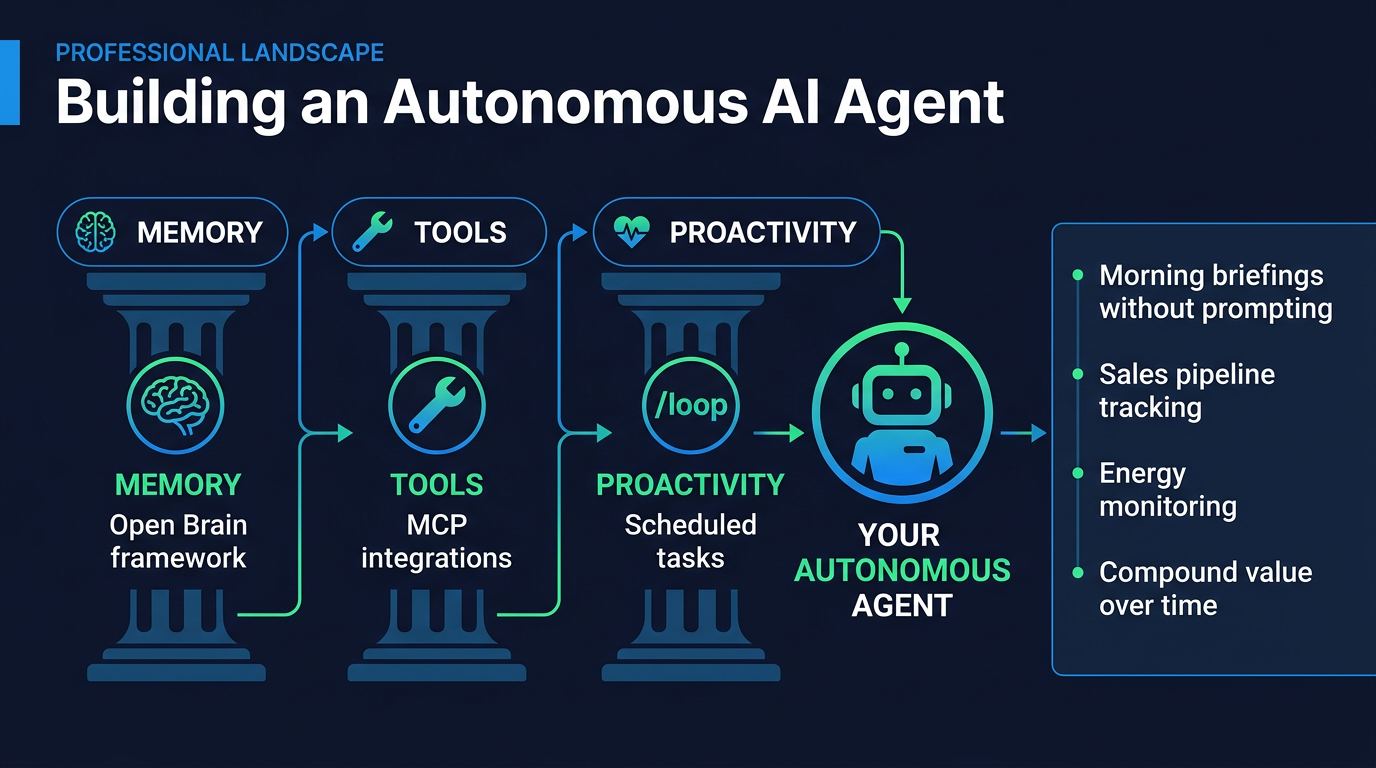
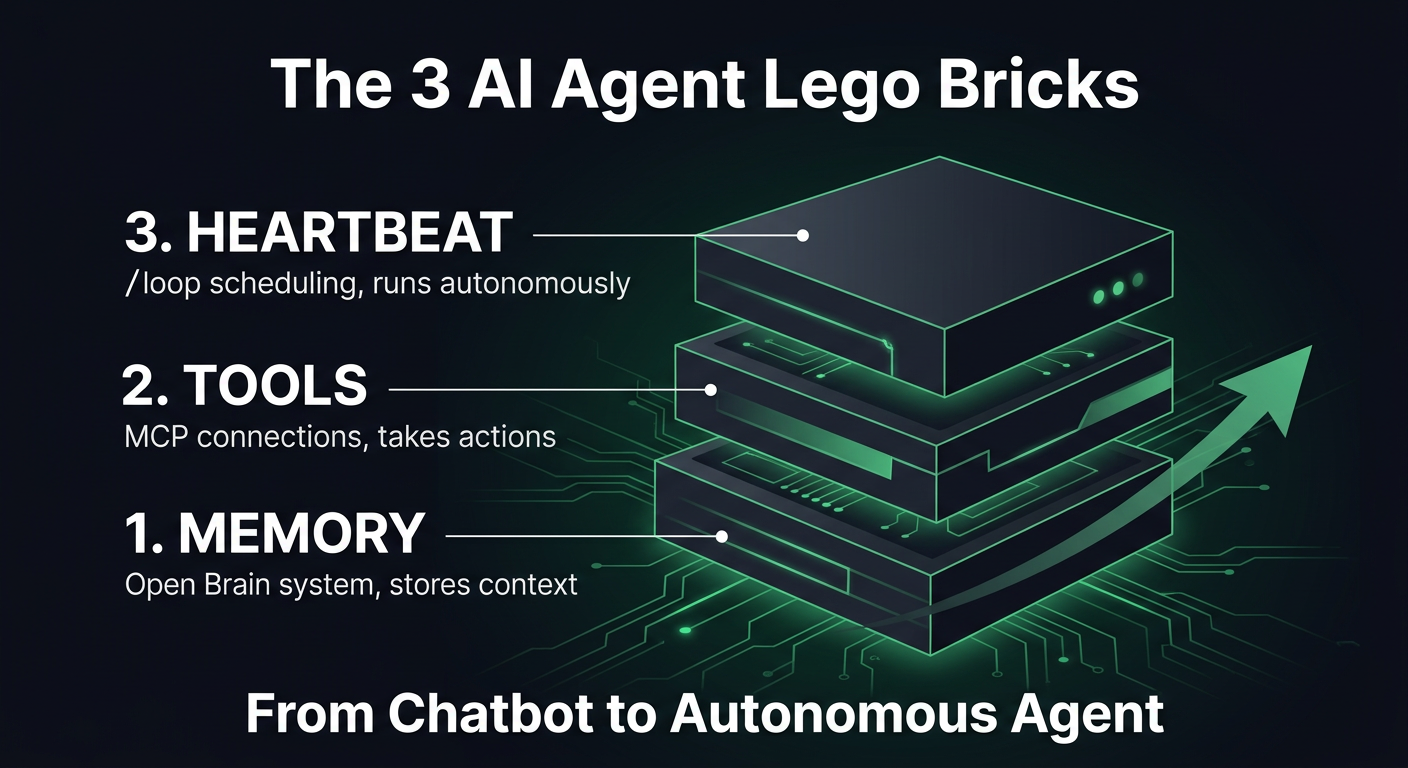
Nate breaks down the three primitives every autonomous agent needs:
- Memory — Context that persists between sessions. Solved with Open Brain, a lightweight personal AI memory system.
- Tools — The ability to take actions in the world. Already available through MCP (Model Context Protocol) integrations.
- Heartbeat (Proactivity) — The ability to wake up and do work on its own schedule.
/loopis this missing piece.
Stack all three together, and you no longer have a chatbot that responds to prompts — you have an agent you can actually delegate to.
Key Findings
- Claude Code is not just for developers anymore. Marketers, product managers, and knowledge workers are already in Claude Code because a terminal is just a chatbot without guardrails.
/loopcloses the last architectural gap. Before this, agents needed a human to initiate every cycle. Now they can run on schedules (every 5 minutes, every morning at 9am, etc.) independently.- The combination creates compound value. An agent with memory, tools, AND a heartbeat builds knowledge over time — each run making the next more useful.
- This is the OpenClaw stack without the chaos. Same core autonomous agent architecture, but the clean separation between scheduling (in Claude Code) and memory (in Open Brain) keeps it controllable.
Use Cases Covered
- Morning briefings — Agent runs overnight, checks sources, builds a report, delivers it to you before you wake up
- Sales pipeline tracking — Monitors deal stages and contacts without manual logging
- Energy tracking — Logs and reports on usage patterns over time
- The capstone: genuine delegation — The morning briefing scenario where every primitive fires at once, showing what full autonomous operation looks like
Practical Takeaways
- If you already built Open Brain and connected MCP tools, you are holding all the pieces right now
- The
/life-engineskill in Claude Code can wire everything together with step-by-step guides provided in the article - A companion guide turns morning briefings into short animated videos on your phone
- The terminal is “time travel” — using Claude Code now puts you months ahead of those waiting for a friendly UI
- Gaps acknowledged: still requires terminal comfort, and the UI democratization is coming but not here yet
Infographics