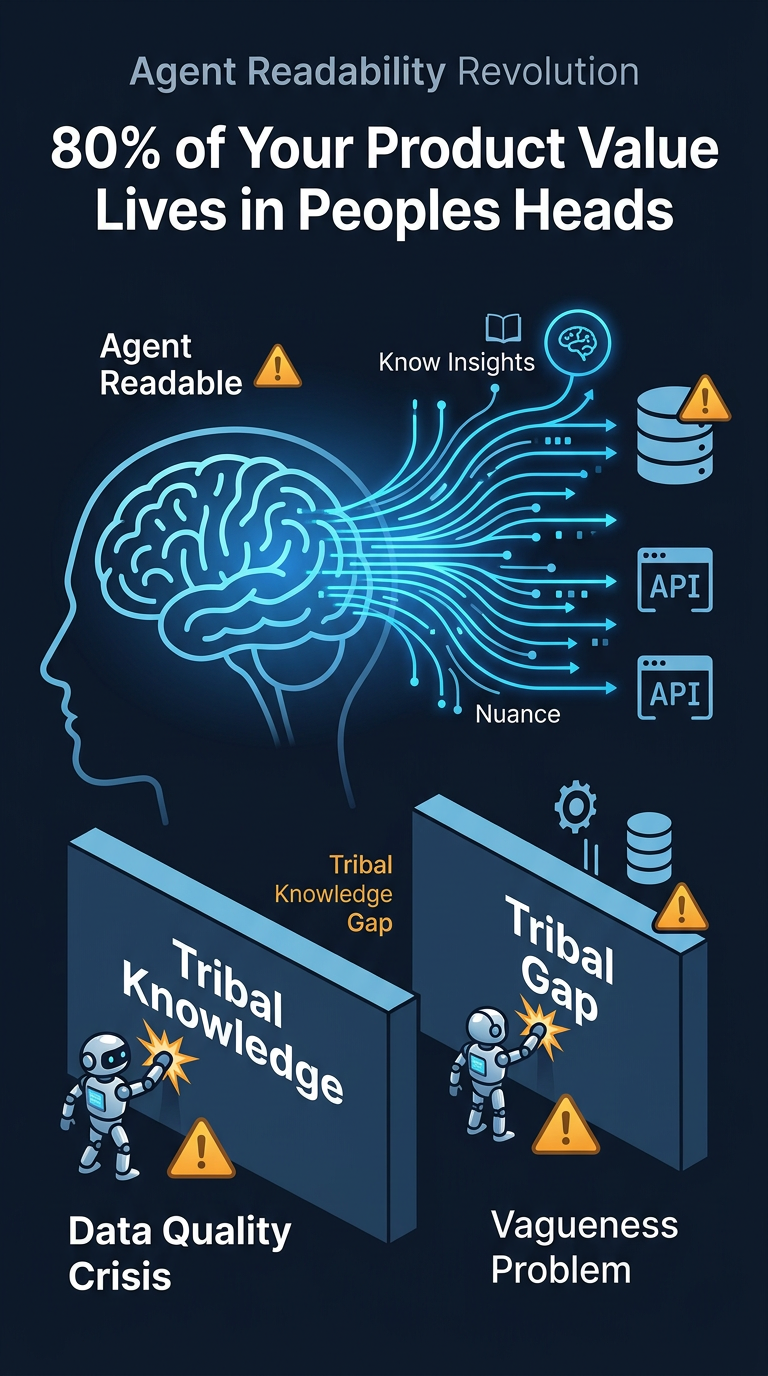
Executive Briefing: 80% of what makes your product worth buying lives in people's heads. Agents can't read it. Here's…
Original article: Read on Nate’s Substack
Published: March 22, 2026 | Processed: March 23, 2026
Summary
Main Thesis
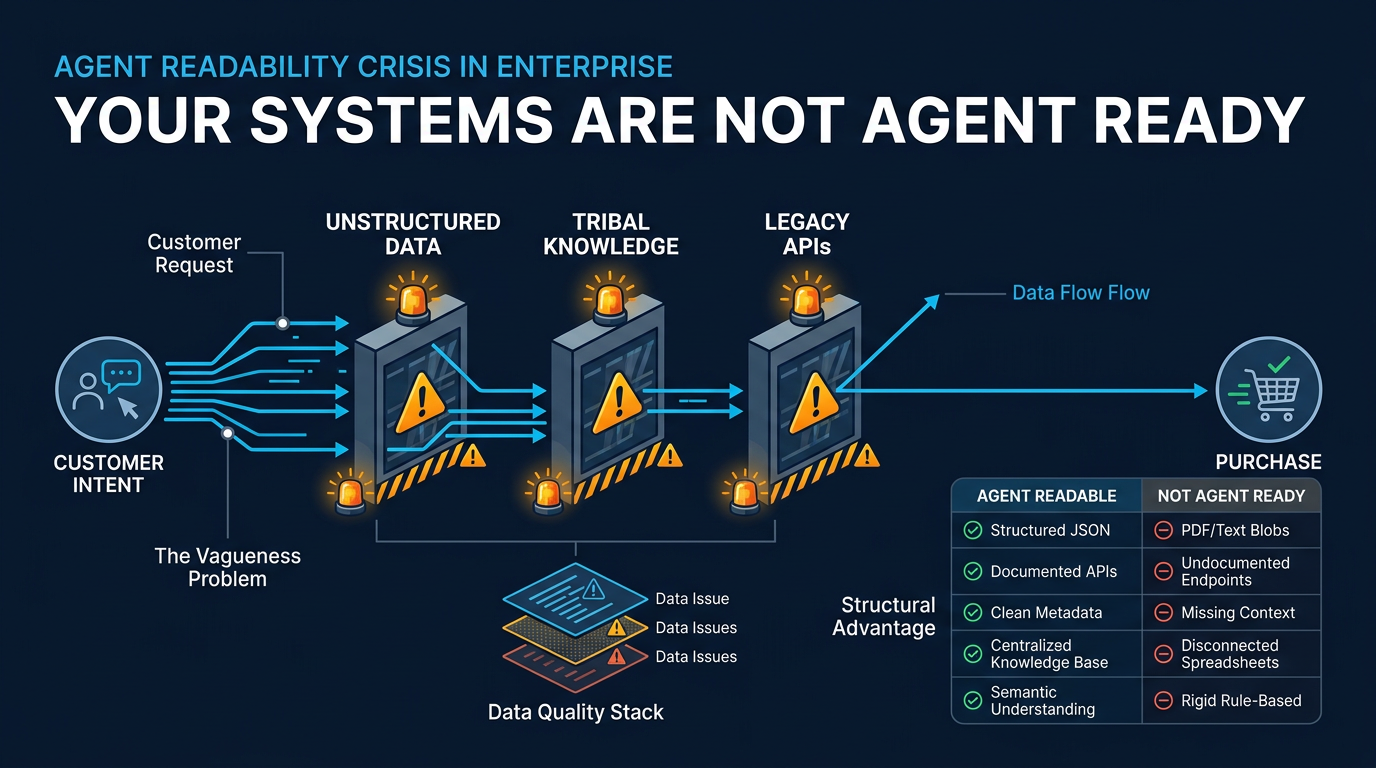
OpenClaw’s explosive growth (250,000 GitHub stars in weeks, Jensen Huang calling it “the OS for personal AI” at GTC) is a demand signal — but the real story is the structural precondition almost nobody is talking about: whether enterprise systems are agent-readable and agent-writable. The products, services, and transactional infrastructure that let customers discover, evaluate, and buy are largely inaccessible to agents. Fixing this is much harder than current conversations acknowledge.
Key Arguments & Data Points
-
The Napster Moment: OpenClaw’s rise is analogous to Napster. Apple, Google, and Meta are responding the way the music industry responded — by building walls — and will lose for the same reasons. The demand is irreversible.
-
Agent Readability is a Data Quality Problem, Not an API Problem: Making systems agent-readable forces a fundamental cleanness of data architecture down the entire stack. The real challenge isn’t building an API wrapper — it’s that 80% of what makes a product worth buying lives in people’s heads, not structured databases.
-
The Vagueness Problem: This is described as the highest-leverage insight in the piece — and it applies to B2B SaaS as much as retail. When agents need to make decisions on behalf of customers, ambiguous product data causes failures that are invisible until customers leave.
-
Four Dangerous Misconceptions Executives Hold:
- “We have an API, we’re fine” (API ≠ agent-readable)
- “We’ll just add AI features” (missing the transactional layer)
- “This is a developer problem” (it’s a data architecture + business problem)
- “We have time” (structural advantages compound every quarter)
Practical Takeaways
-
Run five diagnostic exercises to measure your exposure (designed to be uncomfortable)
-
Use four prompts to:
- Run an agent readiness diagnostic on your transactional flows
- Conduct a tribal knowledge audit (quantify the 80% outside your databases)
- Run a competitive simulation in 30 minutes
- Build a transformation roadmap your CTO and CFO can align on
-
Companies that move first build structural advantages that compound quarterly. This is about whether agents can complete a purchase on behalf of your customers — not just summarize your website.
Infographics